Guides › Oxygen concentrator at home: price, rent, 5 litre and how to use
Oxygen concentrator at home: price, rent, 5 litre and how to use
What a concentrator does, which size your patient needs, how to set it up on day one, what the lights and beeps mean, and when a cylinder is still needed.
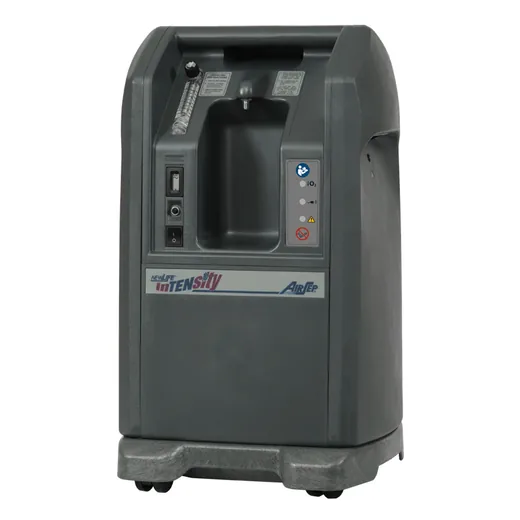
1What is an oxygen concentrator (oxygen machine)?
An oxygen concentrator takes in room air, which is about 21% oxygen, and removes most of the nitrogen. What comes out of the outlet is about 90–96% oxygen. It runs on electricity and never needs refilling.
Inside are two sieve beds filled with zeolite. A compressor pushes air through one bed while the other clears itself, switching every few seconds. That is the soft “puff” you hear.
Purity spec on most 5 L machines is 90–96% across the flow range (some 87–96%). Full purity is reached about 10 minutes after switch-on; the patient can start at once.
2Which patients need an oxygen concentrator at home?
Most families arrive here with a diagnosis, not a product in mind. This is who is usually sent home on oxygen, roughly how long it lasts, and what that means for renting or buying. Your own doctor decides whether your patient needs oxygen at all, and at what flow — this is only to help you plan the cost.
| Who | Why oxygen at home | Usually needed for | Rent or buy |
|---|---|---|---|
| COPD | Lungs cannot clear carbon dioxide or hold saturation on room air, so oxygen is part of daily life once it is prescribed. | Years, often for life | Buy — it pays back in about a year |
| Asthma, severe or brittle | Oxygen during and after bad attacks, and at night for some patients. | Recurring, over years | Buy if attacks keep returning |
| Stroke patient with a tracheostomy | A trach bypasses the nose and mouth, so humidified oxygen is given through the tube. | Months to years | Buy if recovery is slow |
| Heart failure, including acute LVF | Fluid in the lungs drops saturation; oxygen supports the patient through the episode and recovery. | Weeks, sometimes longer | Rent — the need is usually short |
| After chest surgery or pneumonia | Lungs need support while they heal. | 2 to 8 weeks | Rent |
| Lung fibrosis and long COVID lung damage | Saturation falls on walking and the need rarely goes away. | Years | Buy |
Where the rent-or-buy line falls, from our own prices: a 5 litre concentrator rents at ₹3,000 a month and costs ₹32,000 to ₹46,500 to buy, so buying pays for itself between month 11 and month 15. Across all 28 models we hold both prices for, break-even runs 8 to 35 months, with a middle of 14. The simple rule: more than about a year, buy. Less, rent.
If you are renting, we deliver, set the flow against the prescription, train the family and take it back when it is no longer needed. If you are buying, we will tell you which model we would put in our own home and why, and you keep the warranty.
3Oxygen concentrator 5 litre or 10 litre: which size do you need?
The size is the highest flow the machine can give, in litres per minute (LPM). Pick it from the flow the doctor prescribed, and leave headroom.
| Prescribed flow | Machine | Why |
|---|---|---|
| Up to 3 L/min | 5 L concentrator | Runs well below its limit, purity stays high |
| 3–4 L/min | 5 L, plus a backup cylinder | Purity starts to fall near the top of the range |
| 4–8 L/min | 10 L concentrator | Good purity up to about 8 L/min |
| Above 8–9 L/min | Jumbo (D-type) cylinders | A concentrator can’t keep purity this high |
| Needs oxygen outside the house | Portable concentrator | Battery, pulse flow, for travel and short outings |
7 models in stock
1 model in stock
27 models in stock
30 models in stock
Room air is about 21% oxygen. A working concentrator gives 90–96% at its rated flow. Push it past that flow and purity falls — which is why a 5 litre machine set to 5 L/min is not the same as a 10 litre machine set to 5 L/min. Ask for the purity reading at the flow your patient actually uses.
Why the dial isn’t the whole story: 5 L/min at 93% purity carries the same oxygen as about 4.6 L/min from a cylinder. An older machine at 82% gives about 3.9. A patient who needs 4 L/min from a cylinder may not hold their saturation on a tired 5 L machine.
4How to use an oxygen concentrator at home
- Place it About 1 ft (15–30 cm) of open space on every side. Never in a cupboard or behind a curtain: it breathes in room air and overheats.
- Keep fire away No smoking, diyas, gas stove or heaters near oxygen, and no oil or cream on the machine or the patient’s face. Oxygen makes fire burn much faster.
- Plug into the wall Straight into a wall socket. No extension boards. If your voltage drops often, ask us which stabiliser is safe for it.
- Fill the humidifier Only if the doctor wants humidified oxygen. Distilled water, between MIN and MAX. Screw the lid on straight: a crooked lid leaks oxygen.
- Switch on, set the flow All lights flash and it beeps for a few seconds, then only green stays on. Turn the knob to the prescribed number, read at the middle of the ball. Not more “to be safe”.
- Check oxygen is coming The humidifier bubbles, or dip the cannula tips in a glass of water and watch for bubbles. Dry them.
- Fit the cannula Wash hands. Prongs curve down into the nose, tubing over both ears, slider under the chin. Tubing up to about 15 m is fine; route it where nobody trips.
5Daily care: which water to use and when to clean the filter
Fresh water in the humidifier. Unplug, then wipe the outside with a damp cloth.
Wash the humidifier bottle.
Wash the cannula in mild soapy water and air-dry it. Wash the air filter as the manual says, dry it fully before refitting.
Share a cannula, open the cover, or run it without the filter.
6Oxygen concentrator alarm, beep and red light: what to check
Check the patient first, then the machine. If the patient is breathless, confused or the oxygen level is falling, switch to the backup cylinder and call the doctor. Fix the machine after the patient is safe.
Normal.
Oxygen purity is low. Keep using it and call us.
A fault. On many models it stops making oxygen. Switch to the backup cylinder and call.
| Problem | Likely cause | What to do |
|---|---|---|
| Beeps and flashes at switch-on | Self-test | Normal. It settles to green within seconds; yellow can stay for a few minutes while purity rises. |
| Beeping, machine stopped | Power: loose plug, tripped switch, power cut, low voltage | Check the plug and socket, no extension board. Use the cylinder until power is back. |
| Alarm, little or no flow | Kinked tube, loose humidifier lid, very long tubing, knob at zero | Follow the tube from machine to patient, tighten the lid, reset the flow. |
| Hot, then alarm or shut-down | Against a wall, dusty filter, closed hot room | Switch off, let it cool, clean the filter, give it space. |
| Yellow, then red purity light | Low purity: worn sieve beds, weak compressor, wet zeolite | Lower to the prescribed flow, wait a few minutes. Still red: cylinder and technician. |
| Louder than usual, rattling or hissing | Loose cabinet part, blocked filter, worn compressor | Clean the filter. If the noise stays, use the cylinder and book a repair visit. |
| No air from the cannula but machine runs | Humidifier lid loose, tube disconnected, flow knob closed | Check every joint from the outlet to the nose, then test bubbles in water. |
Light colours and alarm names differ by brand (OPI, OCSI, service). Keep the manual’s alarm chart next to the machine.
7Oxygen concentrator or cylinder: stored oxygen against made oxygen
These are not two versions of the same machine. One holds oxygen. The other makes it. Once you see that difference, the whole setup explains itself.
About 1,500 litres are already inside a filled B-type. It is there whether or not there is electricity, whether the patient is in bed, in a wheelchair or in the back of a cab. Open the valve and oxygen comes out. Nothing has to work for that to happen.
There is no oxygen stored inside it at all. It pulls in room air, strips out most of the nitrogen and sends the rest to the patient. To do that it needs a power point, and it has to stay where it is plugged in.
That gives each one a weakness the other does not have. A concentrator stops the second the power goes, and a machine can fail at 3am like any other machine. A patient who depends on it and has nothing else then has no oxygen at all. A cylinder never has that problem — but every litre you breathe from it has to be paid for and refilled.
The concentrator stops within a second. If it is the only oxygen in the house, the patient has none until the power returns.
Compressors and sieve beds wear out, usually without warning. A filled cylinder in the room is the answer; a service call three hours later is not.
A hospital visit, a test, a trip to the clinic. The concentrator stays plugged in at home; only a cylinder or a portable travels with the patient.
The rule that decides everything: run on the free oxygen, and keep the paid oxygen for when the free one cannot run. The concentrator does the daily hours because it costs almost nothing. The cylinder waits, filled, for the power cut, the breakdown and the journey.
Which is why, for almost every patient on oxygen at home, the answer is not one or the other. It is a concentrator doing the work and at least one filled cylinder standing beside it. How many of each, and what size, depends on the prescribed flow and how many hours a day the patient needs it — that is what the calculator below works out.
Full cylinder, run to empty. Keep a reserve: plan on using about 80% of this before it needs a refill.
1 small cylinder, filled.
1 × 5 L concentrator + 1 small cylinder.
2 × 5 L concentrators taking turns + 1 small cylinder.
2 × 5 L concentrators + 2 small cylinders.
2 × 10 L concentrators + 1 sealed small cylinder for transport + jumbo cylinders for power cuts.
Jumbo cylinders only, rented 10–15 at a time.
8Oxygen concentrator on rent or buy: price in Delhi
Rent when the need is for weeks or a few months, or not yet clear. Buy when oxygen is long term (often COPD or lung fibrosis) and the doctor expects it to continue. Renting includes service and a replacement if it fails.
Over 6 months, renting is cheaper. Buying only pays back from month 8.
Based on the cheapest model we hold with both prices. Longer-term patients should compare the specific model they need.
9Portable oxygen concentrator: weight, battery and pulse settings
A portable concentrator runs on a battery and weighs a few kilos, so the patient can go out, travel by car or sit in another room. Most give oxygen in pulses: a puff only when the patient breathes in, set as a “setting” from 1 to 5 or 6, not in litres per minute.
Patients on low flow who are active, short trips, hospital visits, travel. Some models are approved for flights; check with the airline.
Patients who need continuous flow at night, high flow, or oxygen through BiPAP. A pulse setting is not the same as L/min, so ask the doctor to check saturation on it.
10Which brand or company oxygen concentrator is best?
In India most home machines come from a handful of makers: Philips (EverFlo), DeVilbiss, Oxymed, BPL, Dr Morepen, Yuwell, Longfian, Nidek and others. Any good 5 L machine should state its purity range, alarms, noise level and power use in the manual.
| Check in the manual | Good sign |
|---|---|
| Oxygen purity | 90–96% across the flow range, with an OPI purity alarm |
| Noise | About 40–50 dB, like a quiet room or a fridge |
| Power | About 300–400 W for a 5 L machine |
| Alarms | Power failure, high/low pressure, low purity, high temperature |
| Service | Filter cleaning weekly, sieve beds and compressor checked by a technician |
| Certification | Medical device registration and a written warranty |
Noise: a soft hum and a “puff” every few seconds are normal. Rattling, a loud hiss or a sudden change in sound means a loose part, a blocked filter or a failing compressor. Call for service.
We give you the manual for the exact model at delivery. If you already own a machine and lost the manual, WhatsApp us the model name and we will help you find the alarm chart.
11Oxygen concentrator danger signs: when to call the doctor
- Can’t finish a sentence
- Lips or fingertips turning blue
- Unusually drowsy or confused
- Oxygen level below the doctor’s target and falling, even on oxygen
Call the doctor or go to hospital at once. Don’t just turn the flow higher.
12Best oxygen concentrator for home use in India
| Brand | Model | Warranty | Flow | Purity | Rent | Buy | |
|---|---|---|---|---|---|---|---|
| Oxymed | Mini 3 LPM | 1 year | 1–3 LPM | 93% ± 3 | ₹2,400/mo | — |
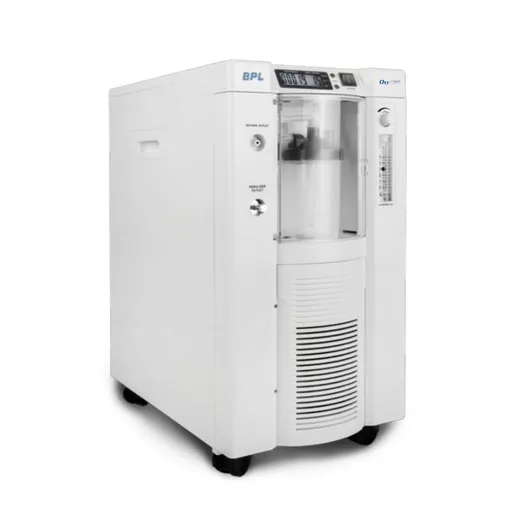 | AirSep | VisionAire 5 | 2 yr | ₹3,000/mo | ₹54,999 | ||
| Arrex | Oxy Pro V 5 LPM | 1 year | 0.5–5 LPM | 93% ± 3 | ₹3,000/mo | — |
| BMC | 5 Litre | 1 year | 0.5–5 LPM | 93% ± 3 | ₹3,000/mo | — |
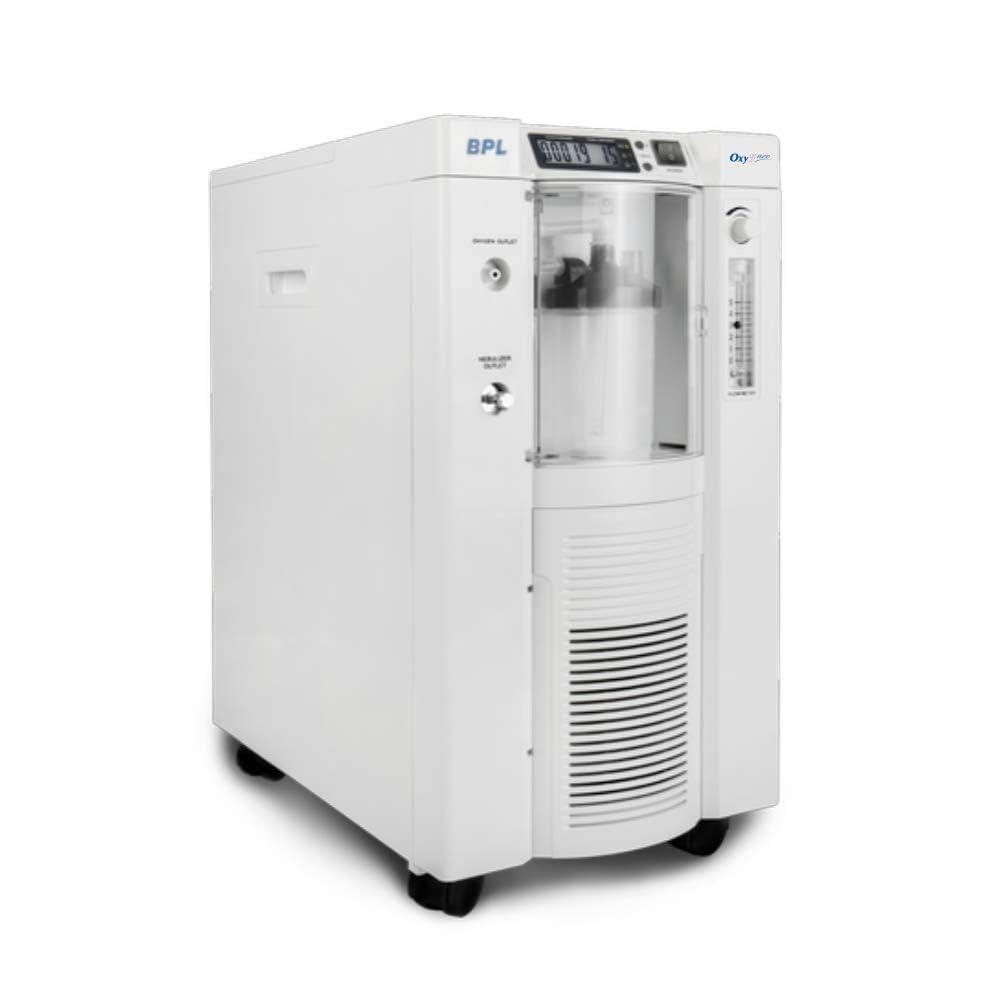 | BPL | Oxy 5 Neo | 1 yr | ₹3,000/mo | ₹38,000 | ||
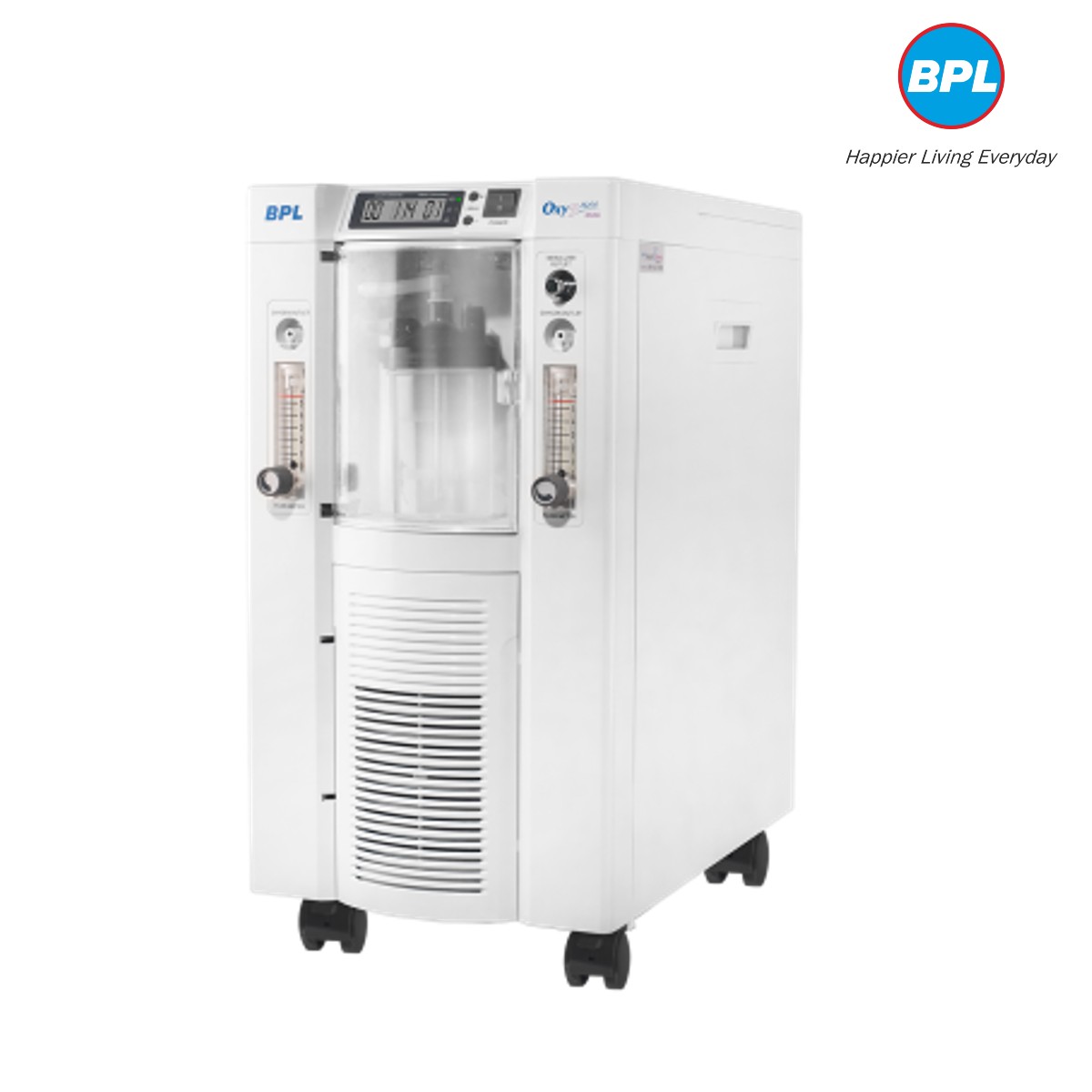 | BPL | Oxy 5 Neo Dual | 1 year | 0.5–5 LPM per outlet, dual output | 87–95.5% | ₹3,000/mo | — |
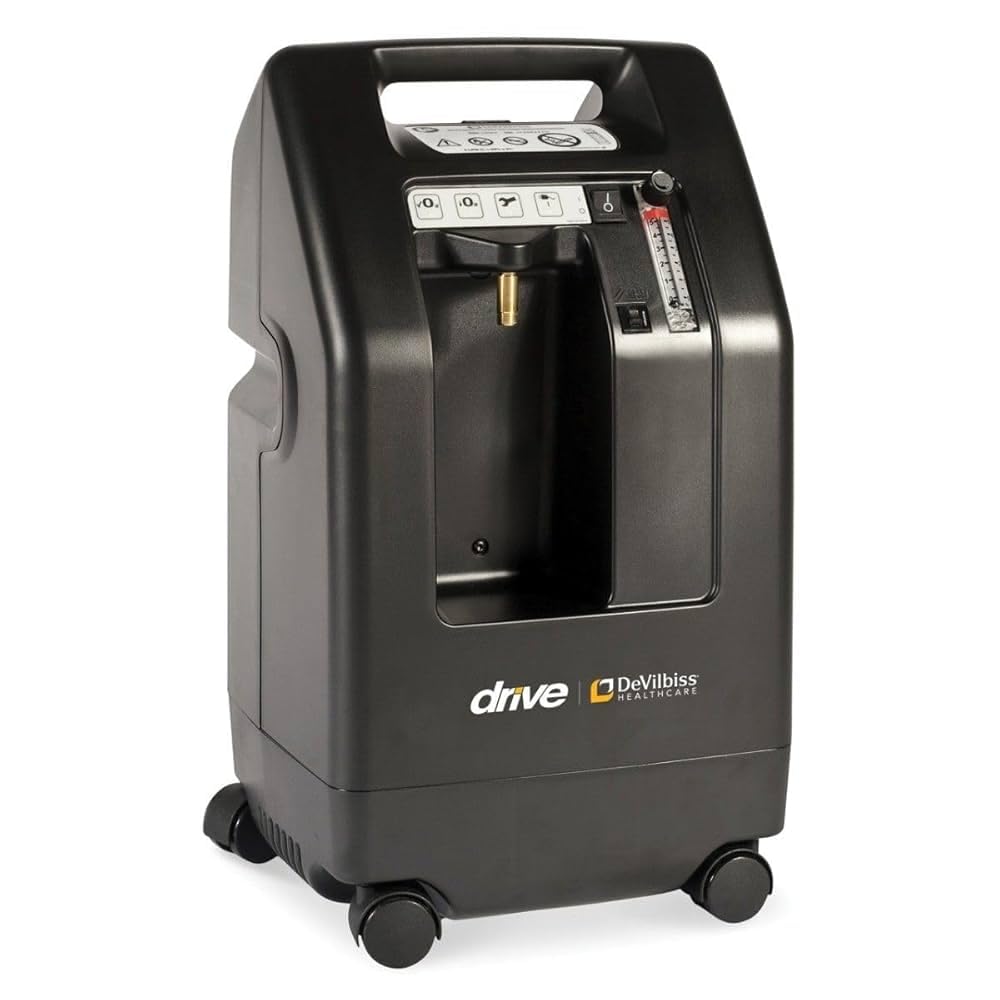 | DeVilbiss | 525DS Compact | 1 yr | ₹3,000/mo | ₹45,984 | ||
| Entrusted | Oxy Care Digi 5 LPM | 1 year | 0.5–5 LPM | 93% ± 3 | ₹3,000/mo | — |
| Entrusted | Oxy Care Plus XL 5 LPM | 1 year | 0.5–5 LPM | 93% ± 3 | ₹3,000/mo | — |
| Entrusted | Oxy Care Smart 5 LPM | 1 year | 0.5–5 LPM | 93% ± 3 | ₹3,000/mo | — |
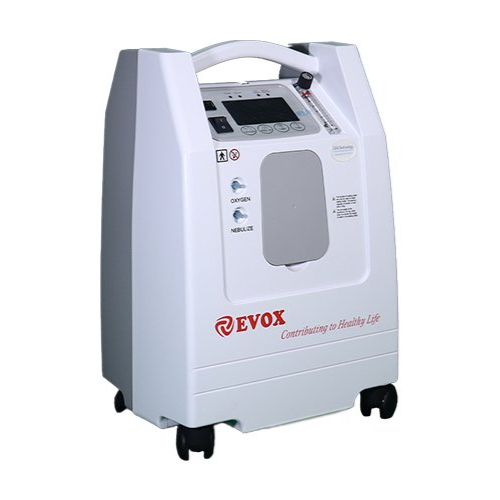 | Evox | 5S | 3 yr | 0.5–5 LPM | ₹3,000/mo | ₹39,500 | |
| GVS | Oxy-Pure 5 LPM | 1 year | 0.5–5 LPM | 93% ± 3 | ₹3,000/mo | — |
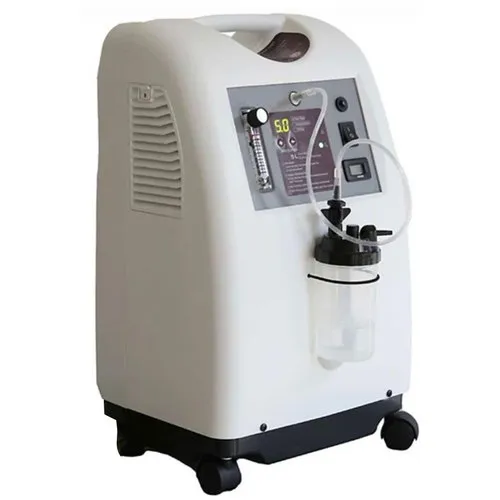 | Jumao | JMC5A Ni | 1 year | 1–5 LPM | 93–96% ± 3 | ₹3,000/mo | — |
| Longfian | JAY-5AW | 1 year | 0.5–5 LPM | 93% ± 3 | ₹3,000/mo | — |
| Longfian | JAY-5BW | 1 year | 0.5–5 LPM | 93% ± 3 | ₹3,000/mo | — |
| Longfian | JAY-5HW | 1 year | 0.5–5 LPM | 93% ± 3 | ₹3,000/mo | — |
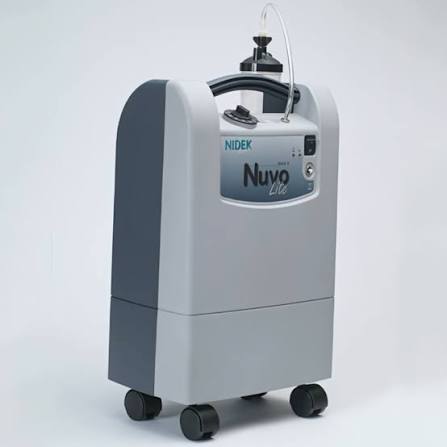 | Nidek | Nuvo Lite | 3 yr | 0.125–5 LPM | ₹3,000/mo | ₹57,599 | |
| Niscomed | Dual Flow 5 LPM | 1 year | 0.5–5 LPM | 93% ± 3 | ₹3,000/mo | — |
| Omron | 5 LPM | 1 year | 0.5–5 LPM | 93% ± 3 | ₹3,000/mo | — |
| Oxymed | Cure 5 LPM | 3 yr | 1–5 LPM | ₹3,000/mo | ₹31,999 | |
| Oxymed | Inteli 5 LPM | 3 yr | 1–5 LPM (auto flow) | ₹3,000/mo | ₹39,999 | |
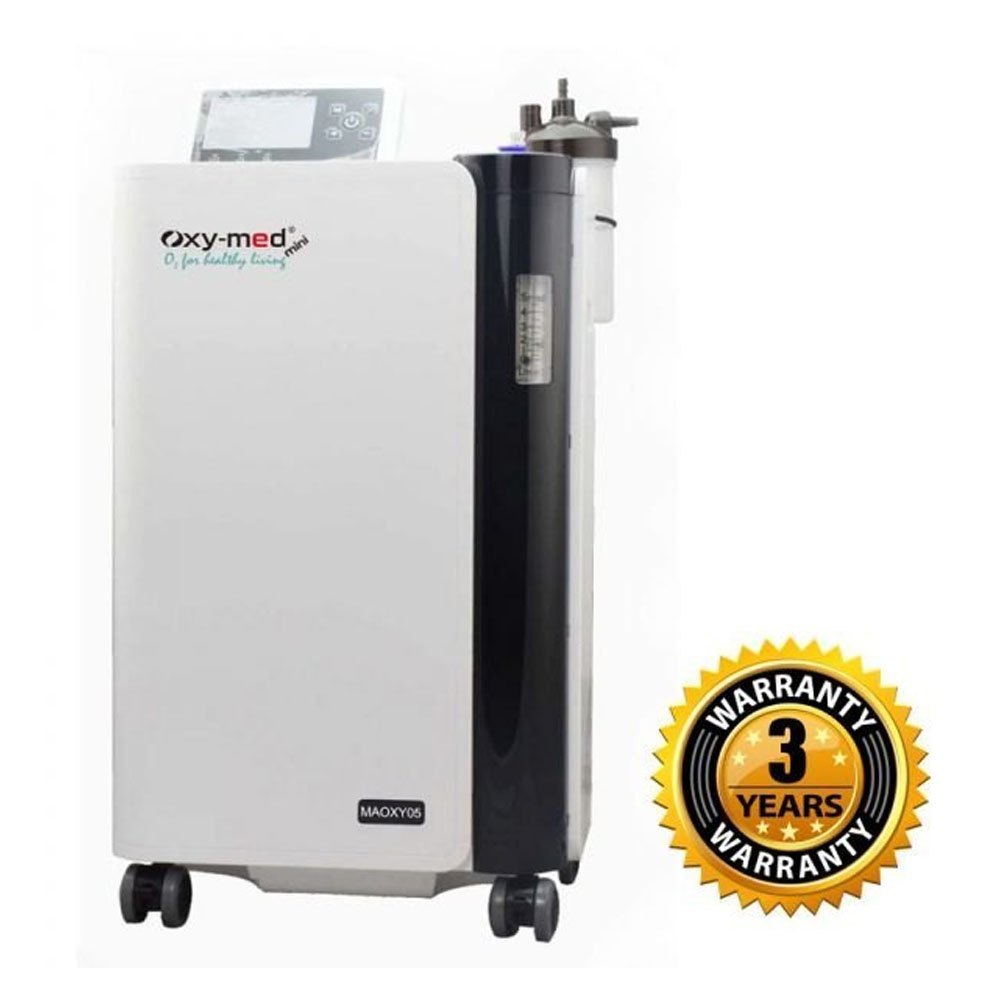 | Oxymed | Mini 5 LPM | 3 yr | 0.5–5 LPM | ₹3,000/mo | ₹37,750 | |
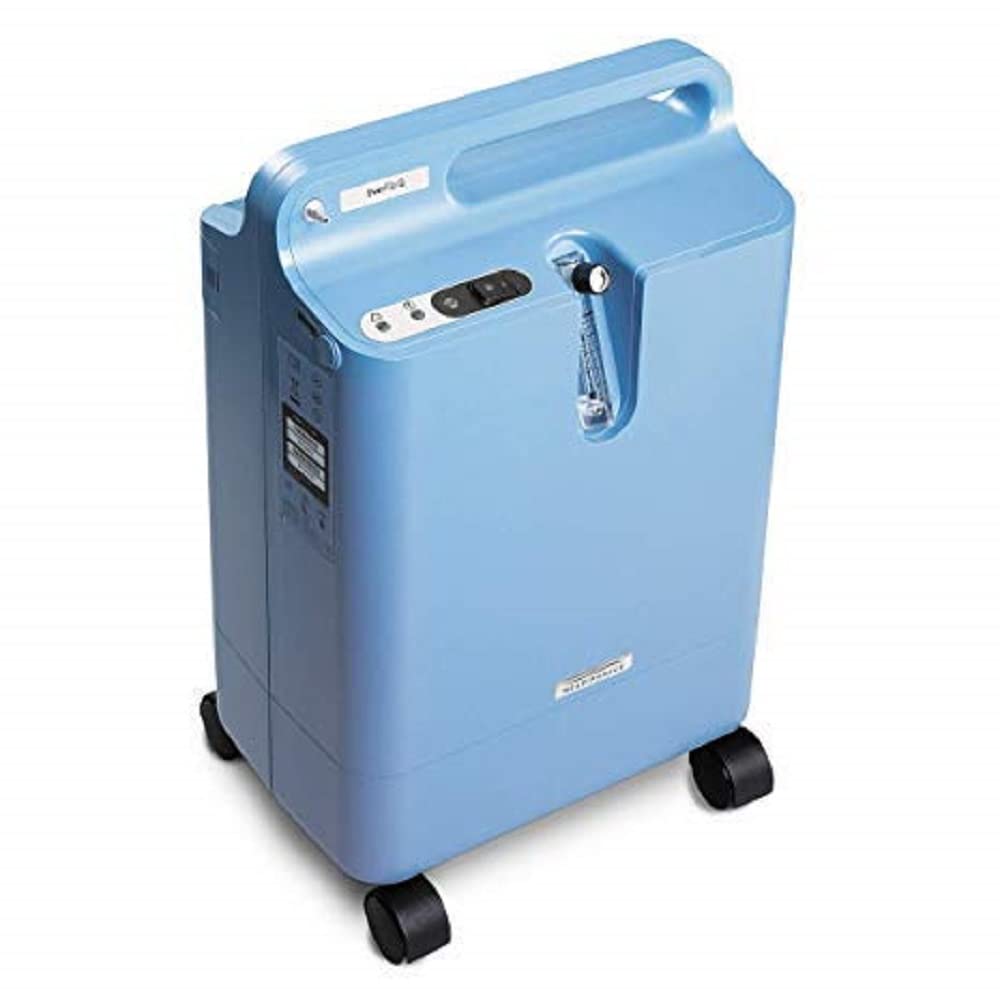 | Philips | EverFlo | 3 yr | 0.5–5 LPM | ₹3,000/mo | ₹46,499 | |
| Yuwell | 7F-5 | 1 year | 0.5–5 LPM | 93% ± 3 | ₹3,000/mo | — |
| Yuwell | 8F-5A | 1 year | 0.5–5 LPM | 93% ± 3 | ₹3,000/mo | — |
| Oxysure | Home 5L | 3 yr | 0.5–5 LPM | ₹3,000/mo | ₹32,899 | |
| Philips | Oxygenate 5 | 3 yr | 0.5–5 LPM | ₹3,000/mo | ₹45,000 | |
| Oxymed | Eco 5 LPM | 3 yr | 0.5–5 LPM | ₹3,000/mo | ₹35,899 | |
| AirSep | NewLife Intensity 10 | 1–3 yr | 2–10 LPM | ₹4,500/mo | ₹1,59,500 | |
| AirSep | Intensity 10 | 2 years | 2–10 LPM | 90% ± 3 | ₹4,500/mo | — |
| BPL | Oxy 10 Neo | 1 yr | ₹4,500/mo | ₹95,000 | ||
| Briteway | 10L Dual Flow | 1 year | 1–10 LPM | 93% ± 3 | ₹4,500/mo | — |
| DeVilbiss | Compact 1025 | 2–3 yr | 2–10 LPM | ₹4,500/mo | ₹1,05,000 | |
| Deckmount | Gene O2 10 Litre | 2 yr | ₹4,500/mo | ₹47,885 | ||
| Dr Diaz | 10L Dual Flow | 1 year | 1–10 LPM | 93% ± 3 | ₹4,500/mo | — |
| Dynmed | 10 Litre | 1 year | 1–10 LPM | 93% ± 3 | ₹4,500/mo | — |
| Entrusted | Oxy Max 10 LPM | 1 year | 1–10 LPM | 93% ± 3 | ₹4,500/mo | — |
| Jumao | 10 LPM | 1 year | 1–10 LPM | 93% ± 3 | ₹4,500/mo | — |
| Katyatech | 10 Litres | 1 year | 1–10 LPM | 93% ± 3 | ₹4,500/mo | — |
| Longfian | JAY-10 | 1 yr | ₹4,500/mo | ₹81,600 | ||
| Meditech | 10 LPM Dual Flow | 1 year | 1–10 LPM | 93% ± 3 | ₹4,500/mo | — |
| Microtek | OXYFLOW 10A | 3 yr | ₹4,500/mo | ₹41,999 | ||
| Microtek | OXYFLOW 10M | 1 year | 1–10 LPM | 93% ± 3 | ₹4,500/mo | — |
| Nidek | UNO-10 | 1 yr | ₹4,500/mo | ₹54,899 | ||
| Niscomed | NO2 10 LPM | 1 year | 1–10 LPM | 93% ± 3 | ₹4,500/mo | — |
| Oxybliss | 10 LPM | 1 year | 1–10 LPM | 93% ± 3 | ₹4,500/mo | — |
| Oxymed | 10 Litre Dual Flow | 2 yr | 1–10 LPM | ₹4,500/mo | ₹51,550 | |
| Oxymed | Mini 10L | 1 year | 1–10 LPM | 93% ± 3 | ₹4,500/mo | — |
| Philips | Millennium M10 | 1–10 LPM | ₹4,500/mo | ₹1,11,999 | ||
| SmartCare | SC101 | 1 year | 1–10 LPM | 93% ± 3 | ₹4,500/mo | — |
| Walnut | MS-OC-10 | 1 year | 1–10 LPM | 93% ± 3 | ₹4,500/mo | — |
| YUERKANG | YRK-10 | 1 year | 1–10 LPM | 93% ± 3 | ₹4,500/mo | — |
| Yuwell | 7F-10 | 1 year | 1–10 LPM | 93% ± 3 | ₹4,500/mo | — |
| Evox | 10 LPM | 2 yr | 1–10 LPM | ₹7,000/mo | ₹54,998 | |
| Nareena | 10 LPM Dual Flow | 1 yr | ₹7,000/mo | ₹59,040 | ||
| Home Medix | HM-8 | up to 8 LPM | ₹7,000/mo | — | ||
| Nidek | Nuvo 10 | 1 yr | ₹7,000/mo | ₹94,079 | ||
| Longfian | JAY-8 | up to 8 LPM | ₹7,000/mo | — | ||
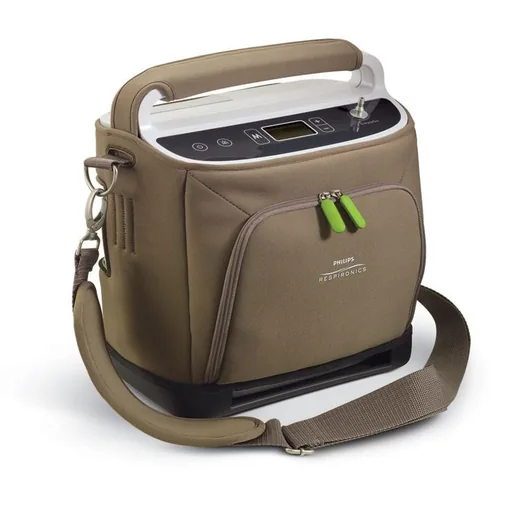 | Oxymed | P2 | 3 yr | Pulse 1–5 | ₹9,000/mo | ₹1,24,500 | |
| Oxymed | P2 Hybrid | 1 year | Pulse 1–5 · Continuous 0.5–1 LPM | ₹9,000/mo | — | |
| Philips | SimplyGo | 2 years | 87–96% | ₹9,000/mo | — | |
| Philips | SimplyGo Mini | 2 yr | Pulse 1–5 | ₹9,000/mo | ₹2,10,700 | |
| Invacare | Platinum Mobile | 2 yr | Pulse 1–5 | ₹9,000/mo | ₹2,10,240 | |
| Inogen | Rove 6 | 2 yr | Pulse 1–6 | ₹9,000/mo | ₹1,93,999 | |
| SeQual (CAIRE) | Eclipse 5 | Continuous 0.5–3 + pulse | ₹9,000/mo | — |
Prices are what we charge in Delhi NCR. Which model arrives depends on the prescribed flow and what is free on the day.
13Which brand of oxygen concentrator do we give you?
We do not sell one brand. These are the oxygen concentrator brands actually in our Delhi stock today, with the number of models we hold and the lowest monthly rent for each. Which one arrives depends on the prescribed flow or size and what is free on the day — tell us the prescription and we will say exactly which machine is coming.
| Brand | Models we hold | Rent from |
|---|---|---|
| Oxymed | 9 | ₹2,400 |
| Longfian | 5 | ₹3,000 |
| Philips | 5 | ₹3,000 |
| Entrusted | 4 | ₹3,000 |
| AirSep | 3 | ₹3,000 |
| BPL | 3 | ₹3,000 |
| Nidek | 3 | ₹3,000 |
| Yuwell | 3 | ₹3,000 |
33 brands and 65 models in stock; 25 more brands not listed above. Rent across the range runs ₹2,400–₹9,000 a month.
Questions families ask
Can a concentrator run 24 hours?
Good machines are rated for continuous use. Some vendors ask for a rest hour morning and night; check the manual, not the vendor. If you rest it, use the cylinder for those hours.
How much electricity does it use?
A 5 L machine uses about 300–350 W, a 10 L machine about 450–600 W. Running all day, a 5 L uses roughly 8 units a day.
Can I run it on an inverter?
Only if the inverter’s VA rating and battery can carry the machine’s wattage for the hours you need. Ask us before relying on it.
Is concentrator oxygen as good as cylinder oxygen?
Cylinder oxygen is about 99% pure; a concentrator gives about 93%. At the same dial setting the concentrator delivers a little less oxygen, which matters near the top of its range.
Written for families by the MedStay team. Follow your own doctor’s prescription.